Yes, high pressure power washing can damage asphalt shingles, and the damage is often permanent. A hard jet of water strips the protective granules, lifts shingle edges and can push water under the roof. The safer way to remove black streaks is a low pressure soft wash with a cleaning solution. Below is how the damage happens and what to do instead.
What does a pressure washer actually do to a shingle?
An asphalt shingle is a mat coated with asphalt and topped with tiny mineral granules. The granules look like grit, but they do an important job. They shield the asphalt from sun, rain and heat, and they give the roof its color.
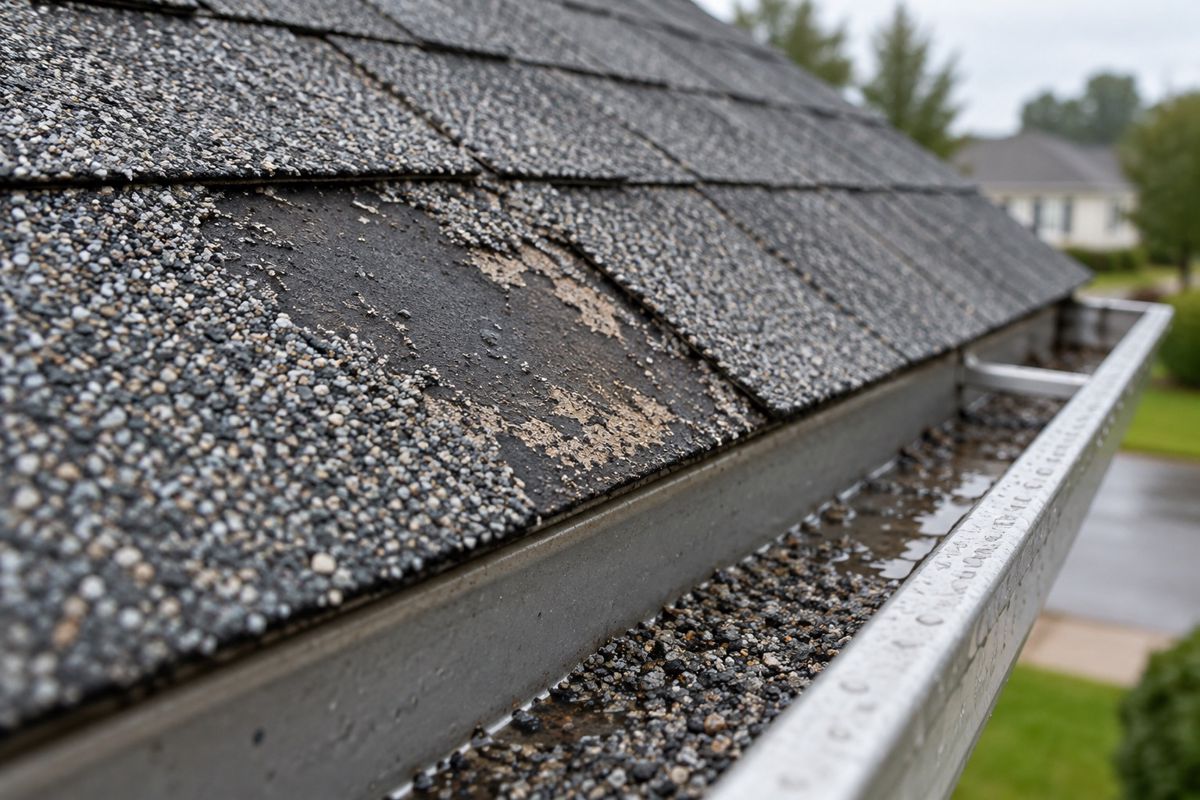
A pressure washer works by hitting a surface with a narrow, fast stream of water. On concrete, that is useful. On a shingle, it acts like sandblasting. The stream knocks granules loose, and once they are gone they do not grow back. The bare asphalt underneath ages faster, becomes brittle and starts to crack.
What kinds of damage can a hard jet cause?
The harm is not always visible on the day. A roof can look cleaner after a pressure wash and then fail early. These are the most common problems.
- Granule loss. Dark patches or bare spots appear, and loose granules end up in the gutters and at the base of downspouts.
- Lifted or broken tabs. Shingles are held down by a sealing strip and nails. A strong jet can break the seal, so wind can then lift the tab.
- Water forced upward. Roofs are built to shed water downhill. A jet aimed up the slope can drive water under the overlaps, into the underlayment and sometimes into the attic.
- Damaged flashing and vents. Metal flashing, vent boots and sealant around chimneys and skylights can be loosened.
- Uneven wear. Streaks of bare shingle where the wand passed more than once, which can be harder to fix than the original stains.
None of this shows up in the first rain. It tends to appear months later, as leaks, stains on the ceiling or a roof that needs replacing sooner than it should.
Why do New York City roofs get black streaks in the first place?
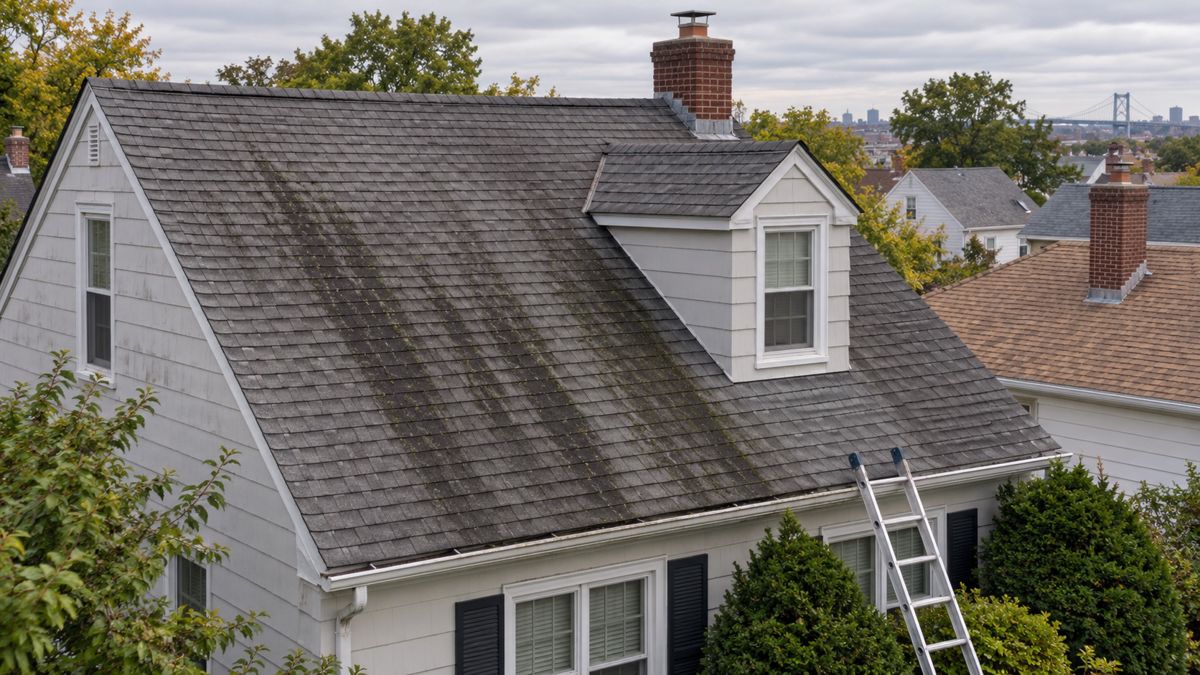
Those dark streaks are rarely dirt. They are usually a type of algae, often called black algae. It spreads on shaded, damp slopes and feeds on the limestone filler in many shingles. Humid summers, wet springs and the shade from tall buildings and street trees give it plenty of help.
You will see it on houses across Queens, Staten Island, the Bronx, parts of Brooklyn and northern New Jersey towns. It is most common on the slope that faces away from the sun. Because it grows in the surface layer, some owners are tempted to blast it off. That is the step that causes the damage, since the algae and the granules sit in the same place.
Does pressure washing void a shingle warranty?
It can. Roofing industry guidance generally advises against high pressure washing on shingles, and some manufacturers say that damage caused by it is not covered. Policies differ between makers and between product lines, so read the wording on your own warranty or ask the manufacturer.
If you rent or own in a co-op or condo, the roof may also be covered by a building policy, and the board may have rules about who can work on it. It is worth asking your managing agent before you book anyone to clean a roof.
What is the safer way to clean a shingle roof?
Soft washing is the standard alternative. Instead of force, it relies on a cleaning solution that kills the algae. The steps are simple.
- Wet the plants and cover delicate ones near the house.
- Apply the solution to the roof at low pressure, working from the top down.
- Let it sit for a short time so it can kill the growth.
- Rinse gently with low pressure water.
- Rinse the gutters, downspouts and the ground around the house.
The streaks do not always vanish on the same day. They often keep fading over the following weeks as rain washes away the treated algae. That slow result is normal, and it is a sign the shingles were not blasted.
You can also slow regrowth without any washing. Trim branches that shade the roof, keep gutters clear so water does not back up, and clean moss while it is still light. Zinc or copper strips near the ridge are another option that some roofers use, and a roofer can tell you whether they suit your roof.
What about flat roofs and co-op or condo buildings?
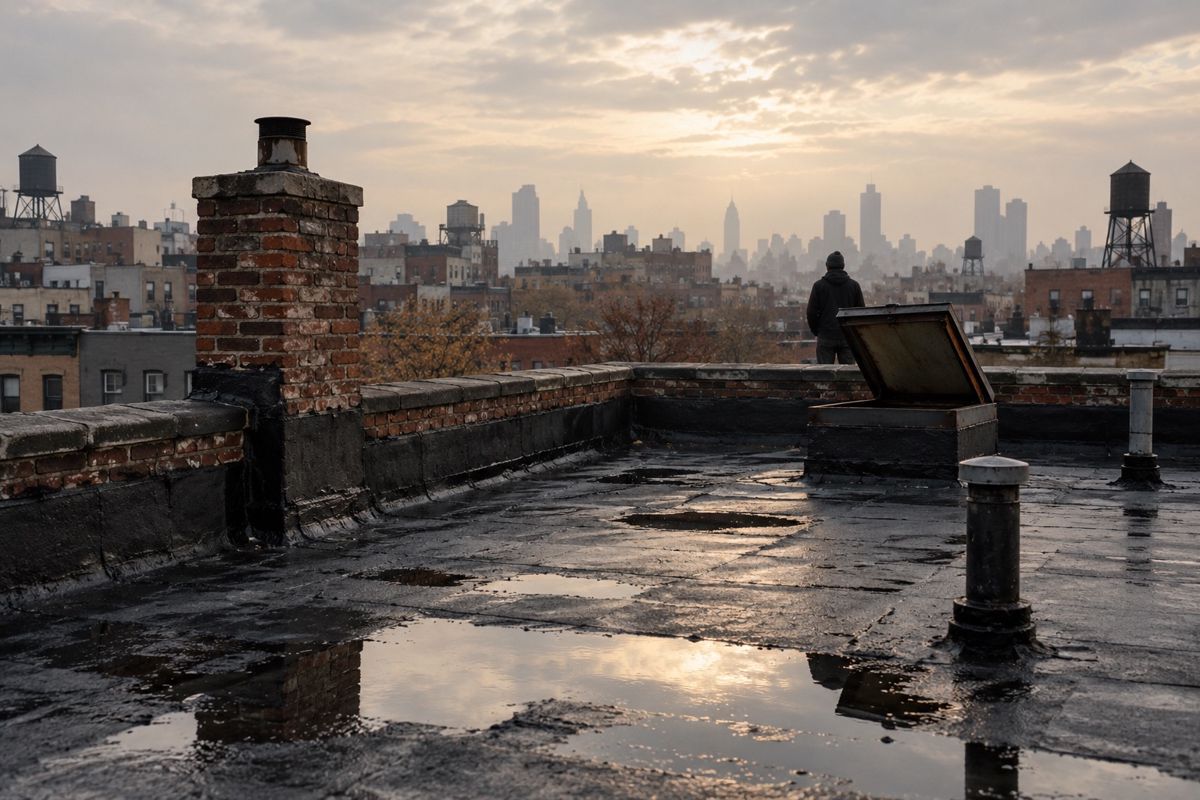
Many roofs in New York City are not pitched shingle roofs at all. Row houses and apartment buildings often have flat or low-slope roofs covered with tar, rubber or modified membrane. Those materials can be damaged by hard jets, harsh cleaners and even foot traffic, and the drainage details matter.
For these roofs, ask the roofer or the building who maintains them before anything is washed. Access is usually through a hatch or bulkhead that the managing agent controls, and board approval may be needed. If a roof is already leaking, curling or missing shingles, repair should come before cleaning. Washing a weak roof can make small problems show up fast.
When should you call a professional, and what should you ask?
Call when streaks are spreading, when moss is building up, or when you are preparing to sell or insure the property. Roof work is also risky for owners. Wet algae is slippery, and falls from ladders and roof edges cause serious injuries. Leave it to a crew set up for it.
Before you hire anyone, ask a few direct questions.
- Will you use low pressure and a cleaning solution, or a pressure jet?
- How will you protect plants, gutters and skylights?
- Can you give me the quote in writing, with what is included and left out?
- What paperwork can you provide that my building or insurer may ask for?
If your shingle roof has black streaks and you want it treated gently, see our page on roof soft washing in New York City. We can tell you whether your roof is a good fit, or whether a roofer should look first.