Skip to content
  • Free written quotes
  • Local crews
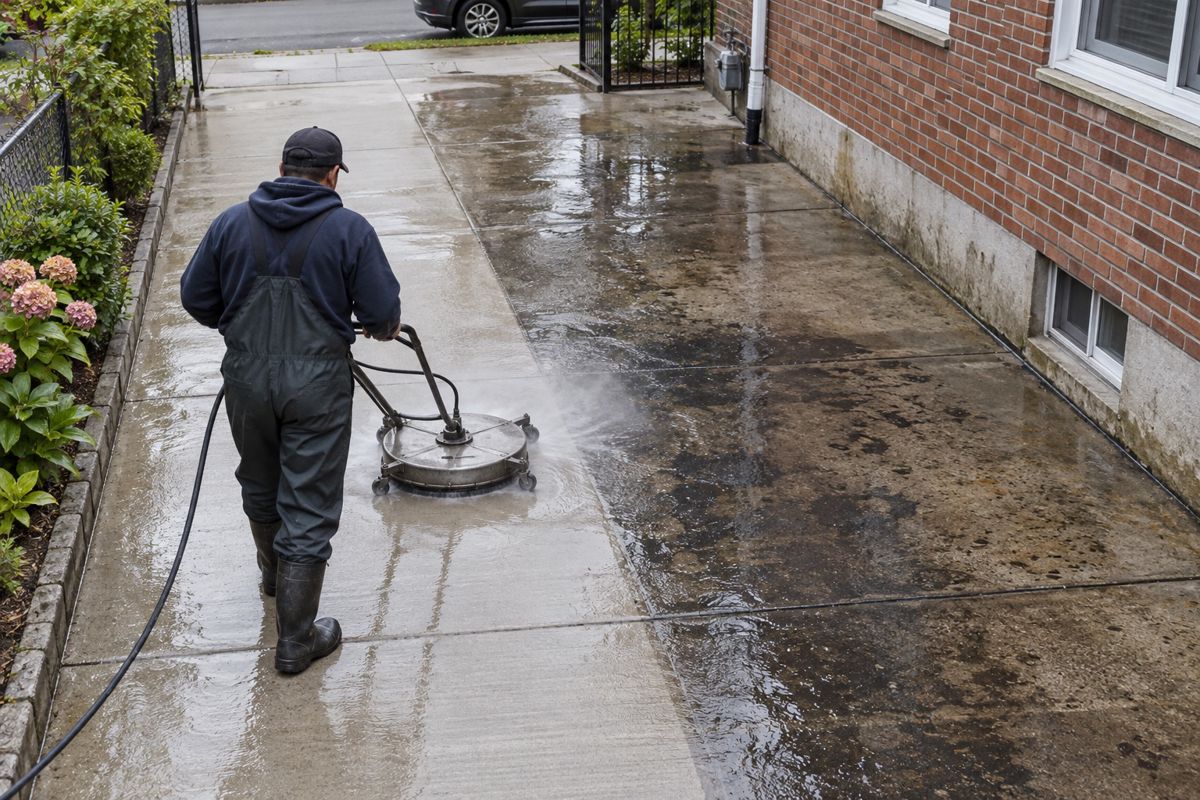
Surface cleaner washing a stained concrete driveway beside a brick house

Concrete and sidewalk washing

Driveway pressure washing in New York City

We clean driveways, stoops, steps, sidewalks and courtyards, and we choose the pressure to suit the surface.

  • Concrete, bluestone and paver surfaces
  • Oil, gum, soot and rust stains addressed
  • Written quote with the areas listed

Step 1 of 3

What needs cleaning?

What does driveway pressure washing involve in New York City?

Driveway pressure washing in New York City covers more than driveways. Outside Manhattan, many row houses have a shared or private driveway and a garage. Across all five boroughs, the same method cleans stoops, steps, sidewalks, courtyards, patios and walkways made of concrete, bluestone and pavers.

The work starts with sweeping and a wet-down. Oil and grease spots get a degreaser and time to soak. Then we clean flat areas with a rotating surface cleaner, which gives an even finish without the stripes a bare wand leaves behind. Edges, steps and corners are done by hand, and the whole area is rinsed. Dirty water is directed away from drains and doors wherever we can.

What stains and problems are common on New York City concrete?

City concrete collects a mix of grime that suburban slabs rarely see.

  • Soot and exhaust film. A gray layer builds up fast near traffic and shows clearly when only part of a path is cleaned.
  • Gum and spills. Sidewalk gum, food and drink stains need heat and patience, not just pressure.
  • Oil and grease. Cars, garage doors and dumpsters leave dark patches.
  • Rust. Fire escapes, railings and iron gates stain steps and stoops orange.
  • Salt residue and mildew. De-icing salt leaves a white film, and shaded courtyards grow green or black mildew.

Old, flaking concrete needs care. High pressure can pull the top layer off a weak slab, so we check the condition first and adjust.

What affects the price of cleaning concrete and sidewalks?

We quote by the job, not by a fixed rate, because the work varies so much. These are the main things that change the price.

  • The total area, and how many steps, corners and edges it has.
  • How heavy the staining is, especially oil, rust and gum.
  • The surface type. Bluestone and pavers need more care than plain concrete.
  • Access, including parking, stairs and how far hoses must run.
  • Water supply. We need a working outdoor spigot or hose connection.
  • Extras such as a second visit or cleaning joints between pavers.

Larger paved areas are covered on our commercial washing page. Whichever you need, the written quote lists what is included.

A stoop, short driveway or front walk is often finished within part of a day. Larger courtyards, long shared driveways and big plazas take longer. We give you a time estimate in the quote once we know the area and the staining.

On the day, we check where water is available and move small items such as planters and mats. We ask that cars be moved off the area. We set out cones or tape near public sidewalks so passers-by stay clear of wet and slippery ground. Water should drain away from your door and from neighbors, so we plan the direction before starting. We avoid washing in near-freezing weather, since wet concrete can turn to ice.

Afterward, the surface stays damp for a while and dries quickly in warm, breezy weather. Sealer, if you plan to use it, should go on only after the concrete is fully dry.

Who is responsible for the sidewalk, and when should I call?

In New York City, the owner of a building is generally responsible for keeping the sidewalk in front of it safe and in good repair. Cleaning does not fix cracks or raised slabs, but it does remove slick mildew and buildup that make walking riskier. Rules change over time, so check city guidance or ask your managing agent about what applies to your property.

Call us when concrete looks gray or black, when oil or rust stains have set in, when you are about to list or rent a property, or before you plan to seal. If the whole property needs attention, house washing pairs well with a concrete cleaning visit, and you can see every service on the home page.

What you can expect

  1. Free written quotes

  2. Local crews

  3. Safe soft-wash methods

  4. Fast scheduling

Step 1 of 3

What needs cleaning?

Questions about pressure washing in New York City

Can pressure washing damage concrete or bluestone?

Yes, if the pressure is too high or the nozzle is held too close. Old concrete can lose its top layer, and bluestone can be pitted or have its joints blown out. We set the pressure for the surface, keep the wand at a steady distance and use a surface cleaner on flat areas. If the slab is already cracked or flaking, we will tell you before we start.

Do you remove gum and oil stains from sidewalks?

We treat them, but results depend on how long they have been there. Fresh oil lifts well with a degreaser. Old oil that has soaked deep into porous concrete may fade rather than disappear. Gum usually needs heat and scraping as well as pressure. We explain what is realistic for each stain in the quote, so you know what to expect before the work.

Where does the water come from for a stoop or sidewalk job?

We use an outdoor spigot, hose bib or basement tap that you or your building allows us to use. Fire hydrants are not an option. If your building has no outdoor connection, tell us when you ask for the quote. We will talk through what is possible before the day, rather than finding out when we arrive.

Where does the dirty water go?

We direct it away from doors, basements and neighbors, and we try to keep oil and heavy debris out of storm drains. City and state rules limit what can be washed into the street, and some jobs call for collecting the wastewater. Tell us about drains and low spots when you request a quote, and we will plan the cleaning around them.

Should I seal concrete after cleaning it?

Sealing is optional. Some owners seal to slow down stains and mildew, while others prefer a natural look. Whether it makes sense depends on the surface, how much shade it gets and how it is used. If you are thinking about sealing, mention it when you ask for a quote so the timing allows the concrete to dry fully first.

How often should concrete be cleaned?

Shaded courtyards and stoops that stay damp may need cleaning every year or so, because mildew returns quickly. Sunny, open driveways can go longer. Sidewalks in front of busy storefronts collect grime and gum faster. A good rule is to clean when you notice a gray or green film, before it becomes slippery or set in.

How it works

  1. Send photos or request a visit

    Tell us what needs cleaning.

  2. Get a written quote

    Clear price before any work starts.

  3. We clean and tidy up

    Rinse, check and leave the site clean.

Ready when you are

Call now or request a quote online.

(212) 555-0154
Get my free washing quote